Fine Guidance Sensor
From Spacefaring
Fine Guidance Sensor (FGS) for the Hubble Space Telescope is a system of three instruments used for pointing the telescope in space, and also for astrometry and its related sciences. To enable aiming the telescope at a specific spot in the sky, each FGS combines optics and electronics. There are three Hubble FGS, and they have been upgraded over the lifetime of the telescope by crewed Space Shuttle missions. The instruments can support pointing of 2 milli-arc seconds. The three FGS are part of the Hubble Space Telescope's Pointing Control System, aka PCS. The FGS function in combination with the Hubble main computer and gyroscopes, with the FGS providing data to the computer as sensors which enables the HST to track astronomical targets.
Wikimedia, Wikidata
FGS
mass 220 kilogram, length 0.5 metre, height 1.6 metre,
PerkinElmer,
United States, Ashkenaz, Calvinist Republic of Ghent, Chinland, Democratic Republic of the Congo, Havilah, Kingdom of Martabam-hongsawatoi, Kingdom of Wolaita, Persia, Reman, Sikh Confederacy, Sweden, Tarshish, Dong Fang Hong 2, Ekran, Fine guidance sensor,
-
Location: KML, Cluster Map, Maps,
 238888main FGS238888main FGS
 Fgs smFgs sm
 Astronaut Joseph Tanner handles a Fine Guidance Sensor during Servicing Mission 2 (S82-E-54041) (cropped)
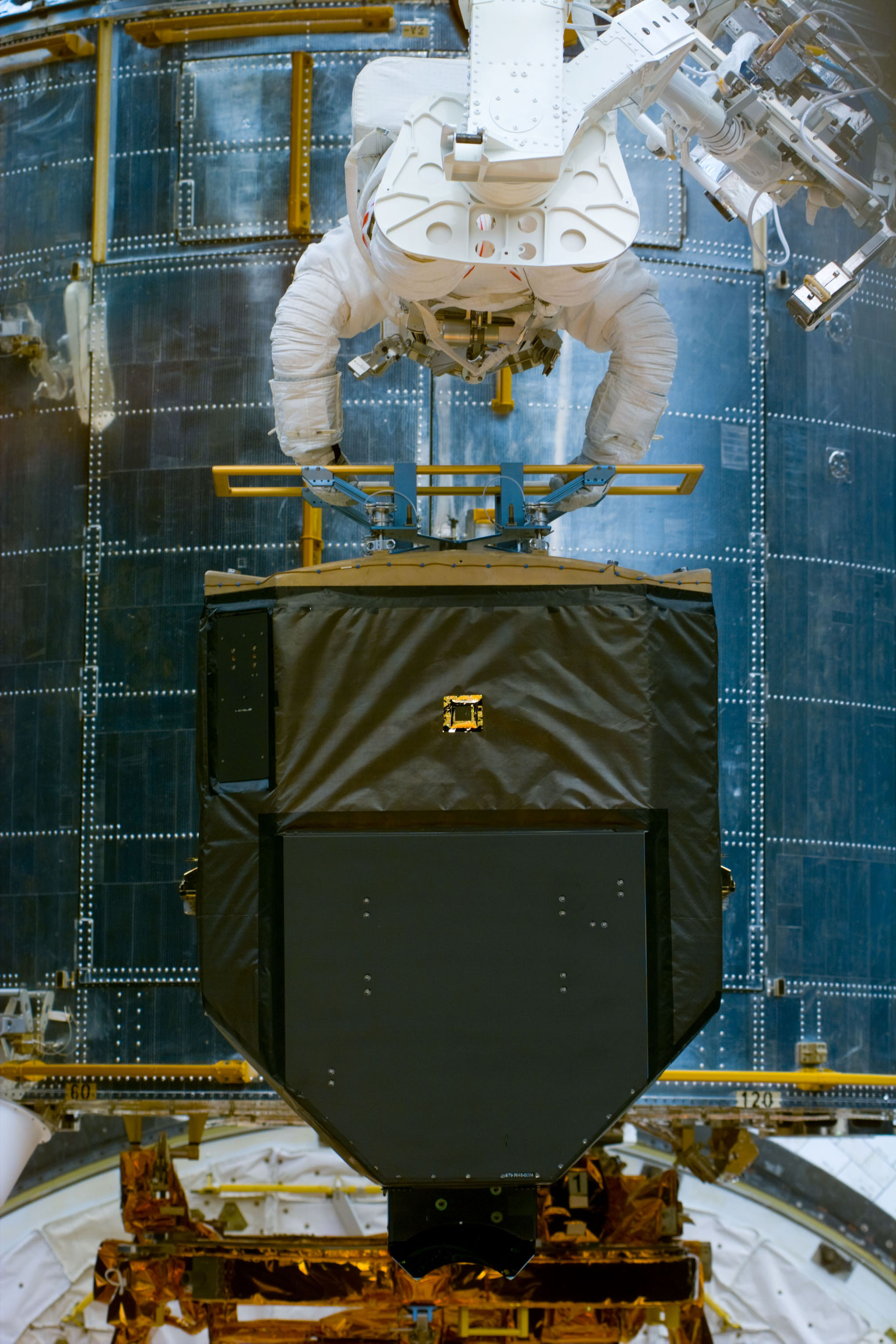 Astronaut Joseph Tanner handles a Fine Guidance Sensor during Servicing Mission 2 (S82-E-54041)Astronaut Joseph Tanner handles a Fine Guidance Sensor during Servicing Mission 2 (S82-E-54041) (cropped)Astronaut Joseph Tanner handles a Fine Guidance Sensor during Servicing Mission 2 (S82-E-54041)
 Gregory J. Harbaugh (left) and Joseph R.Tanner on arm during accessing Fine Guidance Sensor (FGS) in the F site.
 Astronauts Joseph Tanner – on the robotic arm – and Gregory Harbaugh replace the Hubble Space Telescope's Fine Guidance Sensors (FGS) in 1997. The FGS are used to locate and lock onto a target star while science instruments make observations.

_(cropped).jpg)
.jpg)
_Setup_(s82e5407).jpg)
_(3826).jpg)