Parker Solar Probe
From Spacefaring
The Parker Solar Probe is a NASA space probe launched in 2018 to make observations of the Sun's outer corona.
Website,
Wikimedia, Wikidata
NASA Solar Probe; PSP; Solar Probe Plus; Solar Probe+
-
Location: KML, Cluster Map, Maps,
{"selectable":false,"showCurrentTime":false,"width":"100%","zoomMin":100000000000}
 PSP close-up views of solar streamers
 Coronal streamer captured by PSP's WISPR
 The view from Parker Solar Probe's WISPR instrument on Sept. 25, 2018, shows Earth, the bright sphere near the middle of the right-hand panel. The elongated mark toward the bottom of the panel is a lens reflection from the WISPR instrument.
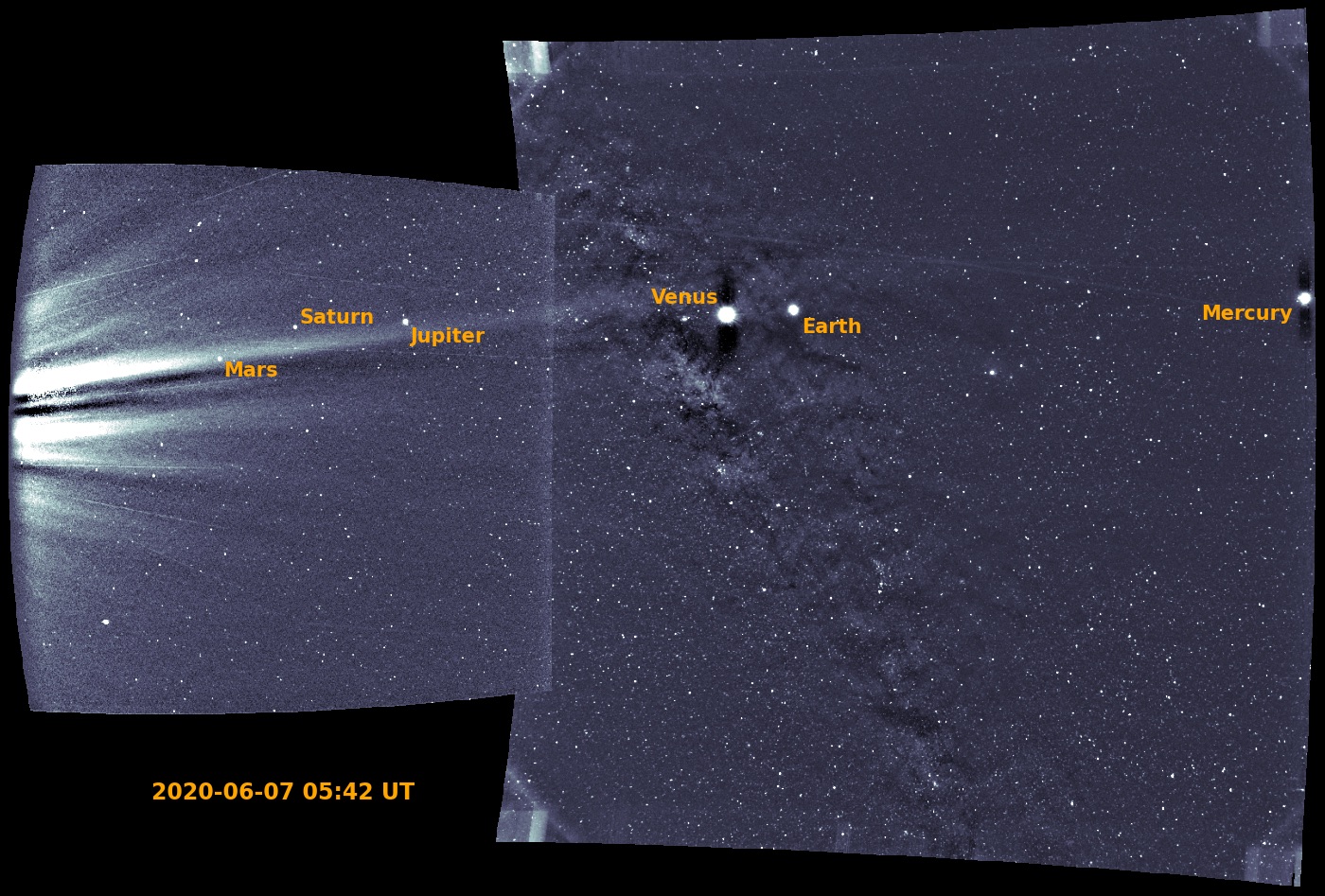 Parker Solar Probe was making its closest approach to the Sun on June 7, 2020, when its Wide-field Imager for Solar PRobe (WISPR) captured the planets Mercury, Venus, Earth, Mars, Jupiter and Saturn in its field of view.
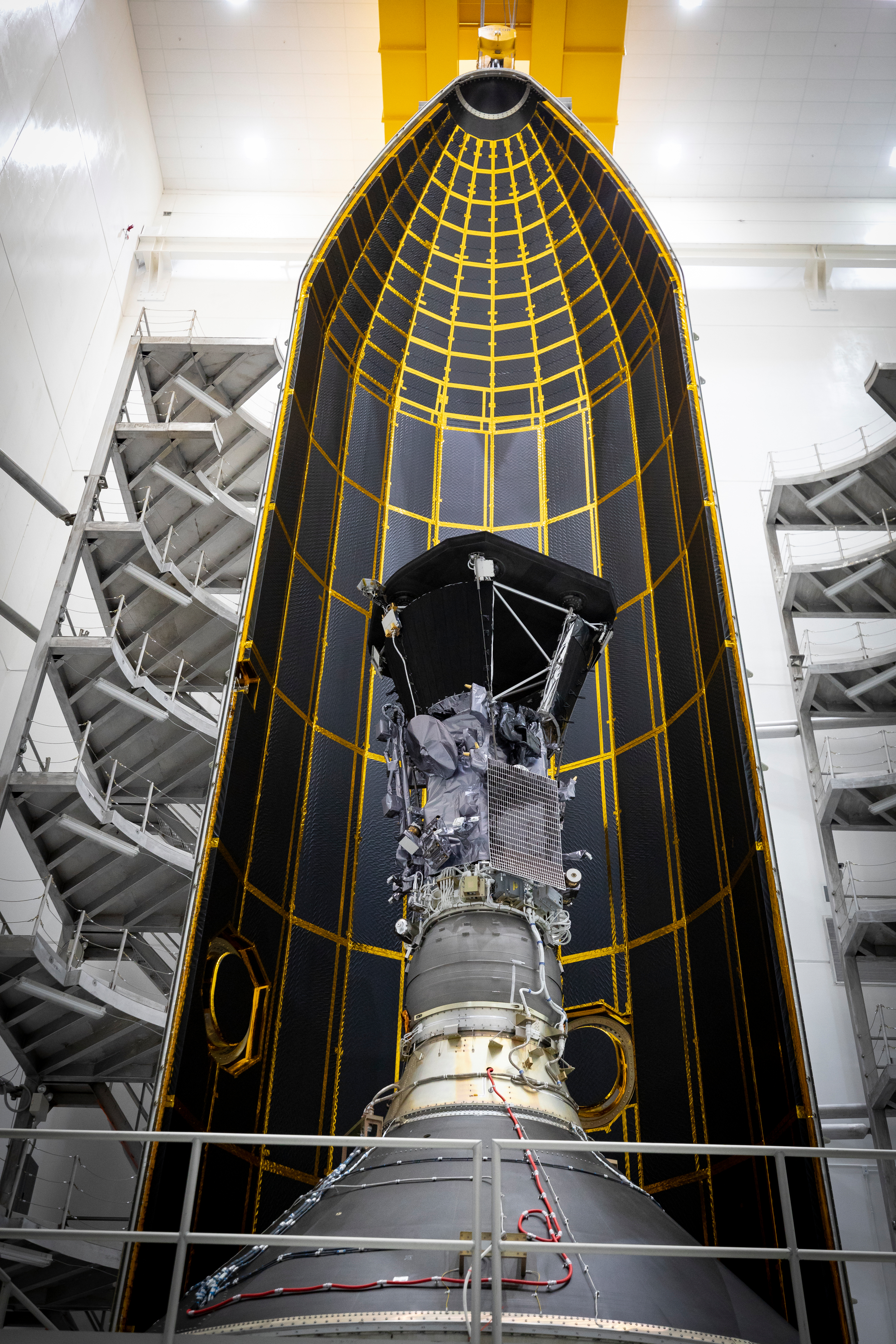 Parker Solar Probe inside one half of its 62.7-foot tall fairing
 Evolution of PSP designThe view from Parker Solar Probe's WISPR instrument on Sept. 25, 2018, shows Earth, the bright sphere near the middle of the right-hand panel. The elongated mark toward the bottom of the panel is a lens reflection from the WISPR instrument.
 Artist’s impression of Parker Solar Probe approaching the Alfvén critical surfaceParker Solar Probe was making its closest approach to the Sun on June 7, 2020, when its Wide-field Imager for Solar PRobe (WISPR) captured the planets Mercury, Venus, Earth, Mars, Jupiter and Saturn in its field of view.Parker Solar Probe inside one half of its 62.7-foot tall fairing


