Viking 1
From Spacefaring
Q210199
Viking 1 was the first of two spacecraft, along with Viking 2, each consisting of an orbiter and a lander, sent to Mars as part of NASA's Viking program. The lander touched down on Mars on July 20, 1976, the first successful Mars lander in history. Viking 1 operated on Mars for 2,307 days or 2245 Martian solar days, the longest extraterrestrial surface mission until the record was broken by the Opportunity rover on May 19, 2010.

1975-08-20T00:00:00Z
1975-08-20T00:00:00Z
1975 Viking 1
1976-07-20T00:00:00Z
1976-07-20T00:00:00Z
soft landing
1982-11-11T00:00:00Z
1982-11-11T00:00:00Z
loss of signal
1982-11-13T00:00:00Z
1982-11-13T00:00:00Z
loss of signal
1975-08-20T00:00:00Z
1975-08-20T00:00:00Z
rocket launch
1976-06-19T00:00:00Z
1976-06-19T00:00:00Z
orbital activity
{"selectable":false,"showCurrentTime":false,"width":"100%","zoomMin":100000000000}
 This is an artist's conception of the sequence of events that will take place just prior to landing a life-detection laboratory on the surface of Mars on July 4, 1976.
Viking I Spacecraft in Cleanroom - GPN-2000-001630
KENNEDY SPACE CENTER, FLA. -- Closeup view shows mated Viking Lander (top) and Orbiter in Kennedy Space Center Spacecraft Assembly and Encapsulation Facility.
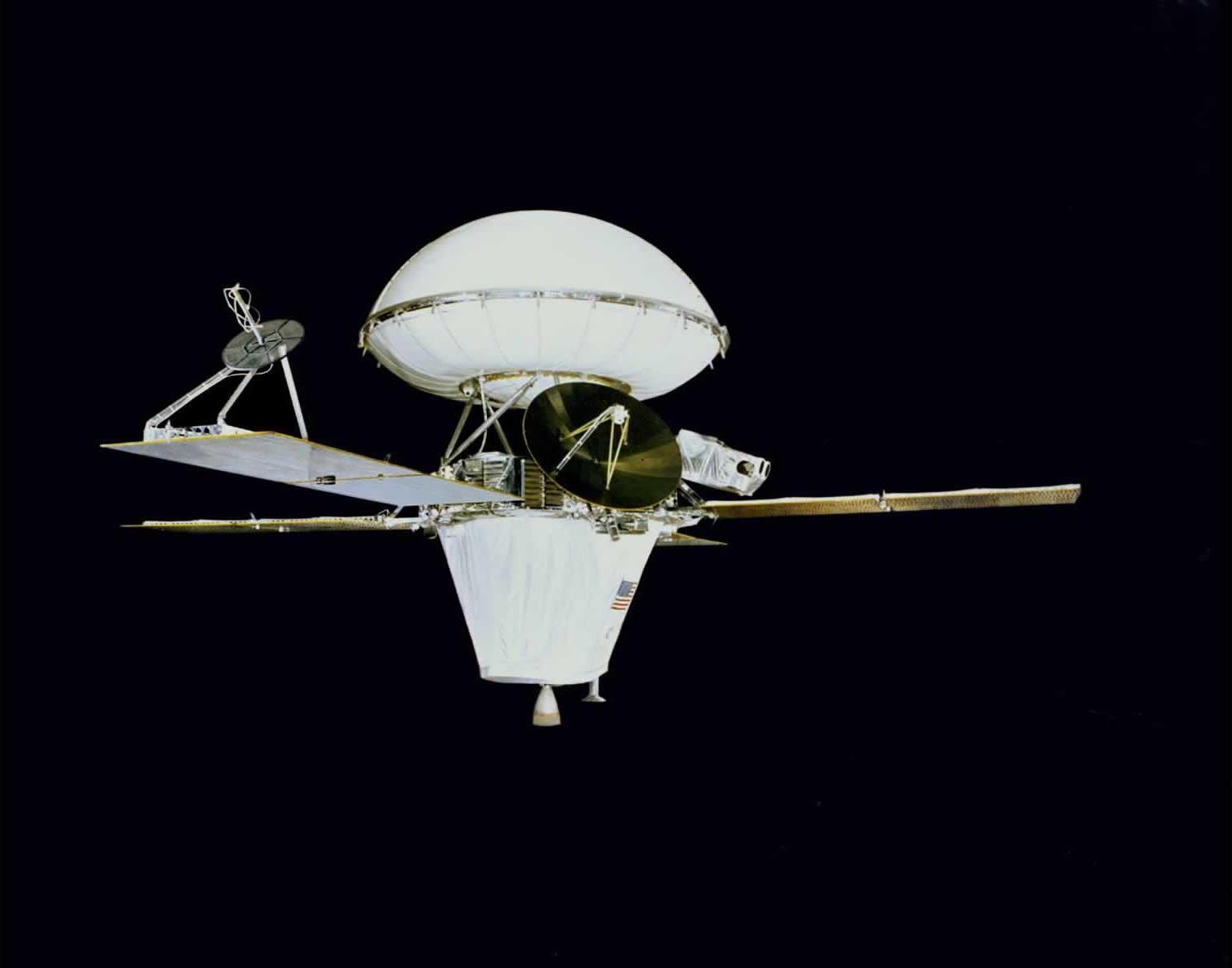 Viking 1 Orbiter and Lander attached, ovale bulge at the top is lander
KENNEDY SPACE CENTER, FLA. -- Technicians prepared for removal of Viking Lander 1's aeroshell cover in KSC's Spacecraft Assembly and Encapsulation Facility 2 (SAEF-2) today.
 KENNEDY SPACE CENTER, FLA. - Closeup view shows mated Viking Lander (top) and Orbiter in Kennedy Space Center Spacecraft Assembly and Encapsulation Facility.
KENNEDY SPACE CENTER, FLA. -- The mated orbiter and lander for Viking A were encapsulated within a Centaur shroud at Spacecraft Assembly and Encapsulation Facility 2 (SAEF-2) today.
MarsAtmosphere T Profile Pathfinder
 PIA00170-MC-10-LunaePalusRegion-19980605
Viking I Probe Model.
- Structure of the neutral upper atmosphere of Mars: results from viking 1 and viking 2. - scientific article published on December 1976, Q1860
- Composition and structure of the martian atmosphere: preliminary results from viking 1. - scientific article, Q1860, 1976
- Argon Content of the Martian Atmosphere at the Viking 1 Landing Site: Analysis by X-ray Fluorescence Spectroscopy - scientific article published on 01 August 1976, Q1860
.jpg)

.jpg&action=edit&redlink=1)
.jpg&action=edit&redlink=1)
.jpg)
.jpg&action=edit&redlink=1)


