Delta IV Heavy
From Spacefaring
Q249492
The Delta IV Heavy was an expendable heavy-lift launch vehicle, the largest member of the Delta IV family. Following the retirement of the Space Shuttle in 2011, it was the most capable operational launch vehicle until the Falcon Heavy's debut in 2018. At the time of its retirement in 2024, it ranked third among active rockets in payload capacity. Developed by Boeing and later manufactured by United Launch Alliance (ULA), it first flew in 2004. The Delta IV Heavy was retired after its 16th and final launch on 9 April 2024 and was succeeded by ULA's Vulcan Centaur rocket, which can offer similar heavy-lift capabilities at a lower cost with a single-core and six solid rocket boosters.
2004 — 2024
Wikimedia, Wikidata
Delta 9250H; Delta-4H
payload mass 13810 kilogram, payload mass 28370 kilogram, mass 733400 kilogram, height 70.7 metre,
United Launch Alliance, United States,
United States, Innovative Interstellar Explorer, Jupiter Icy Moons Orbiter, Parker Solar Probe, Delta, Dong Fang Hong 2, heavy-lift launch vehicle, launch vehicle, Exploration Flight Test-1, 2004,
-
Location: KML, Cluster Map, Maps,
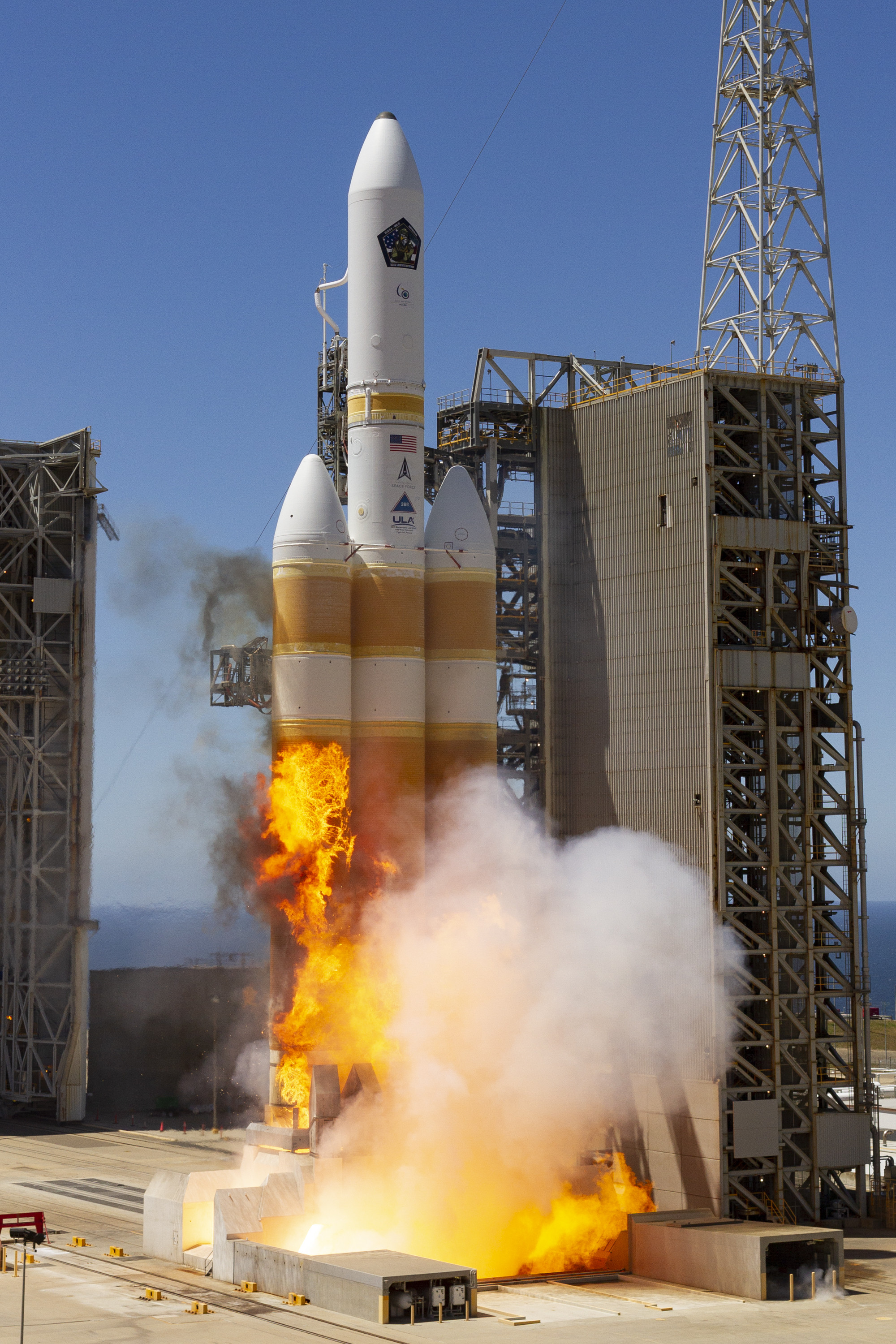 Launch of NROL-82 on Delta IV Heavy
 Delta IV Heavy creating a condensation trail 1 1/2 minutes after launch.
| Type | Subtype | Date | Description | Notes | Source |
|---|---|---|---|---|---|
| commons | image | Launch of NROL-82 on Delta IV Heavy | Commons | ||
| commons | image | Delta IV Heavy creating a condensation trail 1 1/2 minutes after launch. | Commons | ||

