The Man in the Moone
From Spacefaring
Q4186950
The Man in the Moone is a book by the English divine and Church of England bishop Francis Godwin (1562–1633), describing a "voyage of utopian discovery". Long considered to be one of his early works, it is now generally thought to have been written in the late 1620s. It was first published posthumously in 1638 under the pseudonym of Domingo Gonsales. The work is notable for its role in what was called the "new astronomy", the branch of astronomy influenced especially by Nicolaus Copernicus. Although Copernicus is the only astronomer mentioned by name, the book also draws on the theories of Johannes Kepler and William Gilbert. Godwin's astronomical theories were greatly influenced by Galileo Galilei's Sidereus Nuncius (1610), but unlike Galileo, Godwin proposes that the dark spots on the Moon are seas, one of many parallels with Kepler's Somnium sive opus posthumum de astronomia lunari of 1634.


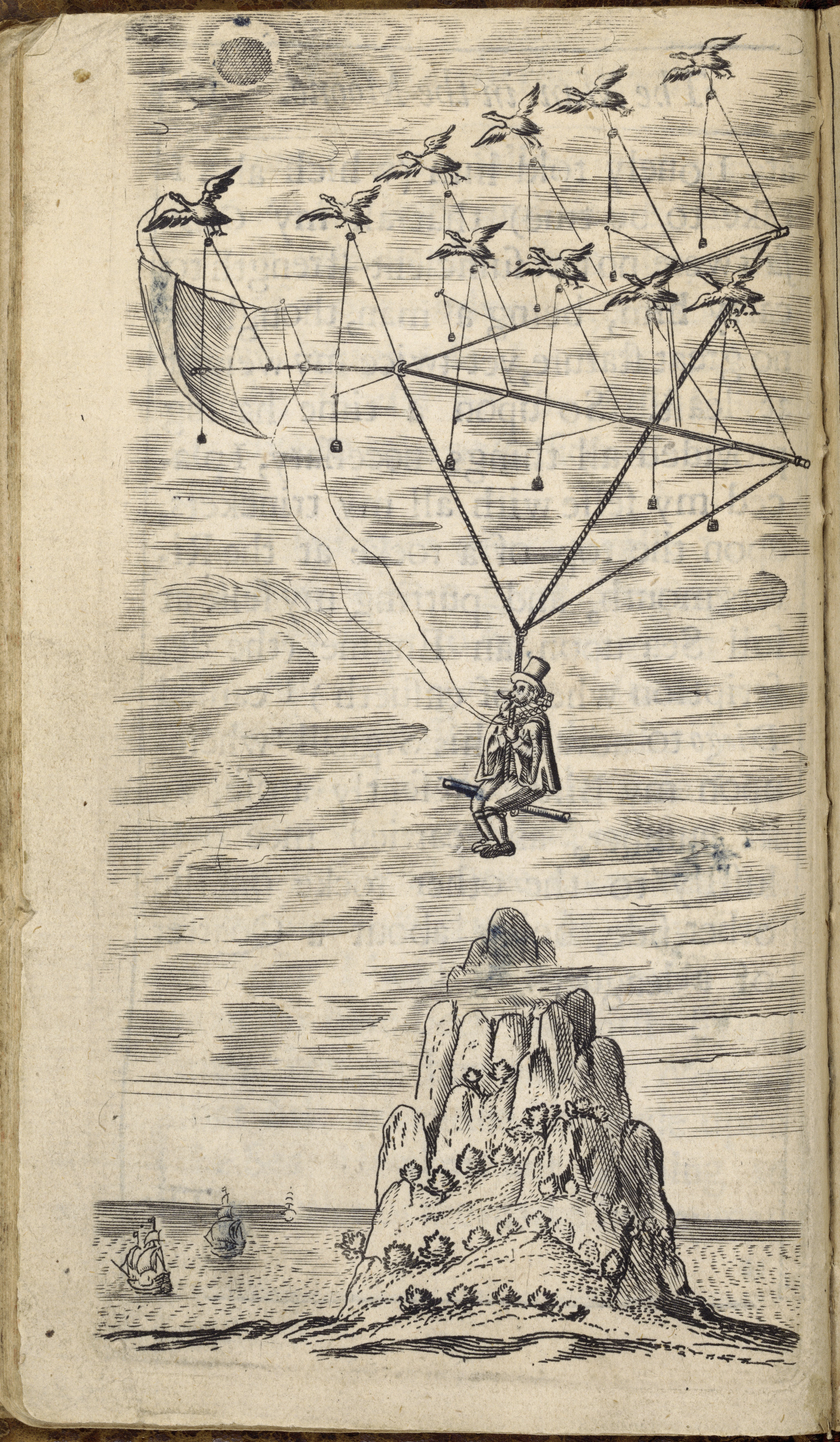 Folger STC 11943.5 - The Man in the Moone, illustration facing page 29
 Man-in-moone-cover-page
 Godwin man in the moone
 Folger STC 11943.5 - The Man in the Moone, b&w composite
 Houghton STC 11943.5 - The Man in the Moone, frontispiece
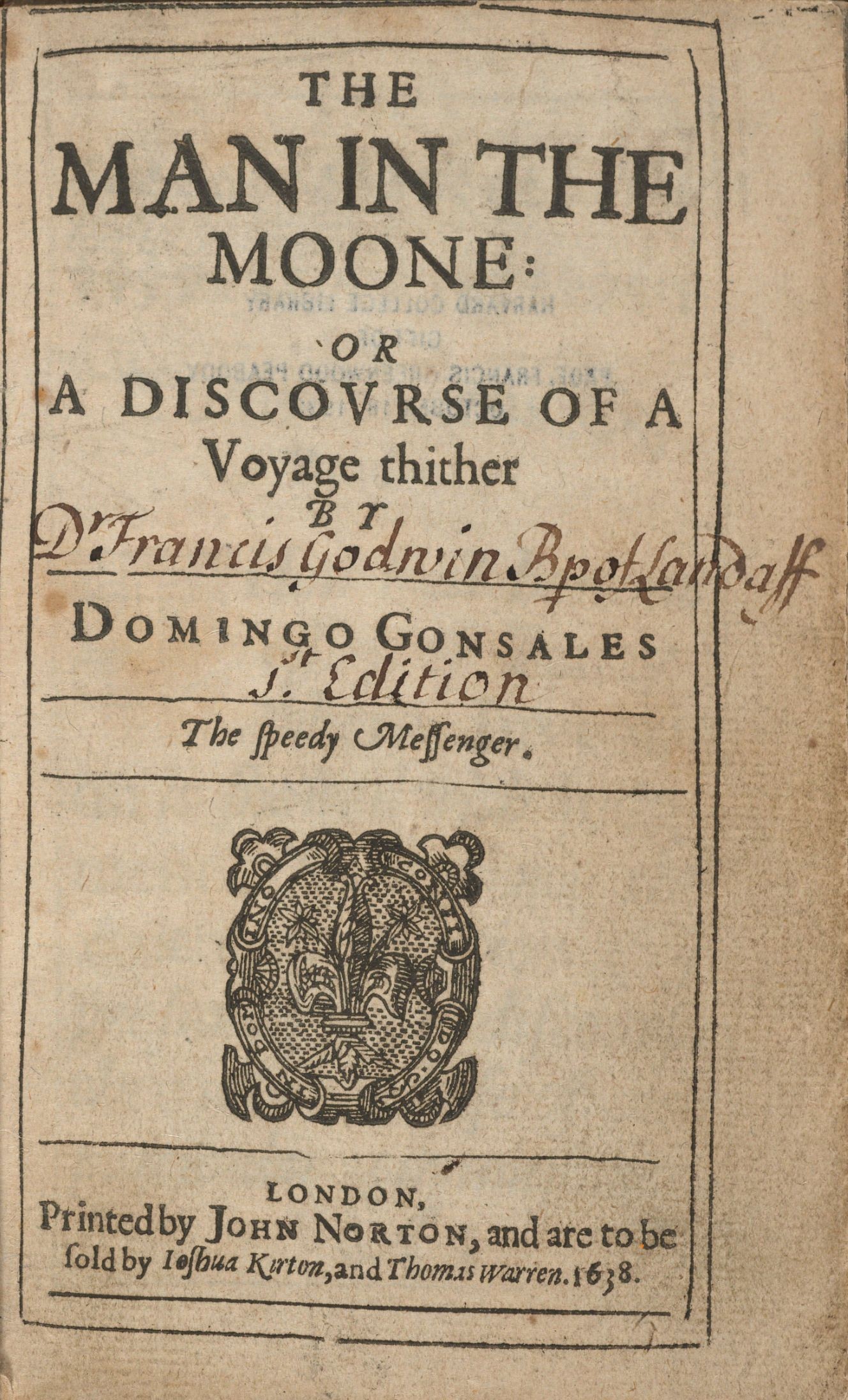 Houghton STC 11943.5 - The Man in the Moone, title
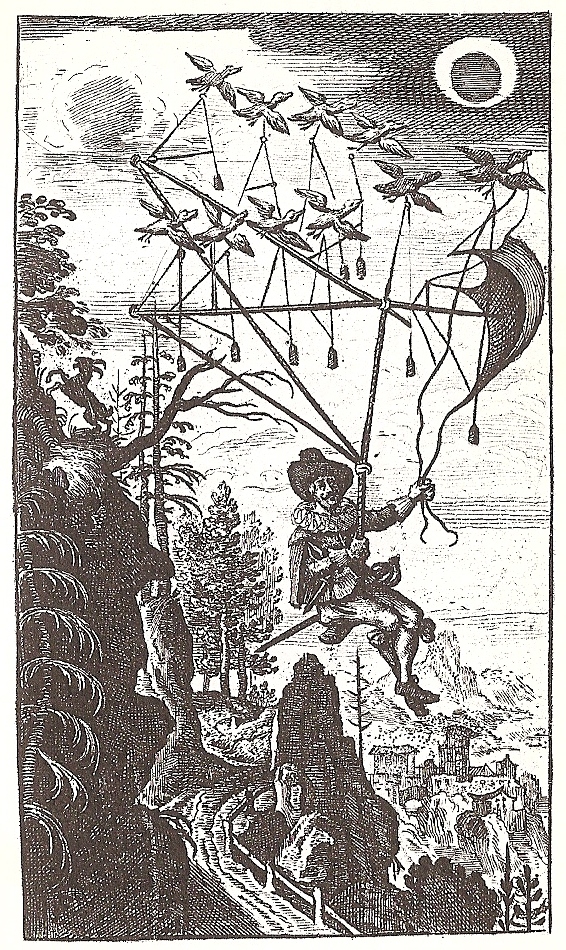 Fliegende Wandersmann 1659
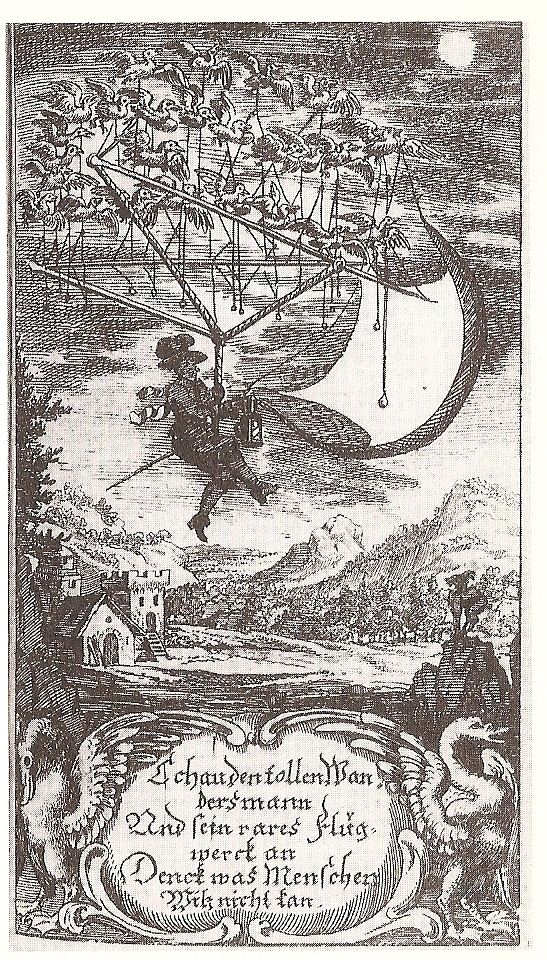 Fliegende Wandersmann, 1684
 Fliegende wandersmann music
| Type | Subtype | Date | Description | Notes | Source |
|---|---|---|---|---|---|
| commons | image | Folger STC 11943.5 - The Man in the Moone, illustration facing page 29 | Commons | ||
| commons | image | Man-in-moone-cover-page | Commons | ||
| commons | image | Godwin man in the moone | Commons | ||
| commons | image | Folger STC 11943.5 - The Man in the Moone, b&w composite | Commons | ||
| commons | image | Houghton STC 11943.5 - The Man in the Moone, frontispiece | Commons | ||
| commons | image | Houghton STC 11943.5 - The Man in the Moone, title | Commons | ||
| commons | image | Fliegende Wandersmann 1659 | Commons | ||
| commons | image | Fliegende Wandersmann, 1684 | Commons | ||
| commons | image | Fliegende wandersmann music | Commons | ||


