Manned Orbiting Laboratory
From Spacefaring
The Manned Orbiting Laboratory (MOL) was part of the United States Air Force (USAF) human spaceflight program in the 1960s. The project was developed from early USAF concepts of crewed space stations as reconnaissance satellites, and was a successor to the canceled Boeing X-20 Dyna-Soar military reconnaissance space plane. Plans for the MOL evolved into a single-use laboratory, for which crews would be launched on 30-day missions, and return to Earth using a Gemini B spacecraft derived from NASA's Gemini spacecraft and launched with the laboratory.

 The MOL used computers for design and simulation
 Manned Orbiting Laboratory concept illustration (120210-F-XN622-009)
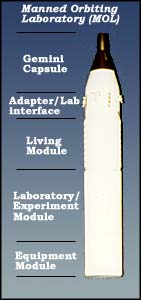 MOL configuration
 MOL patch from NRO
 MOL hardware under construction
 MOL computers
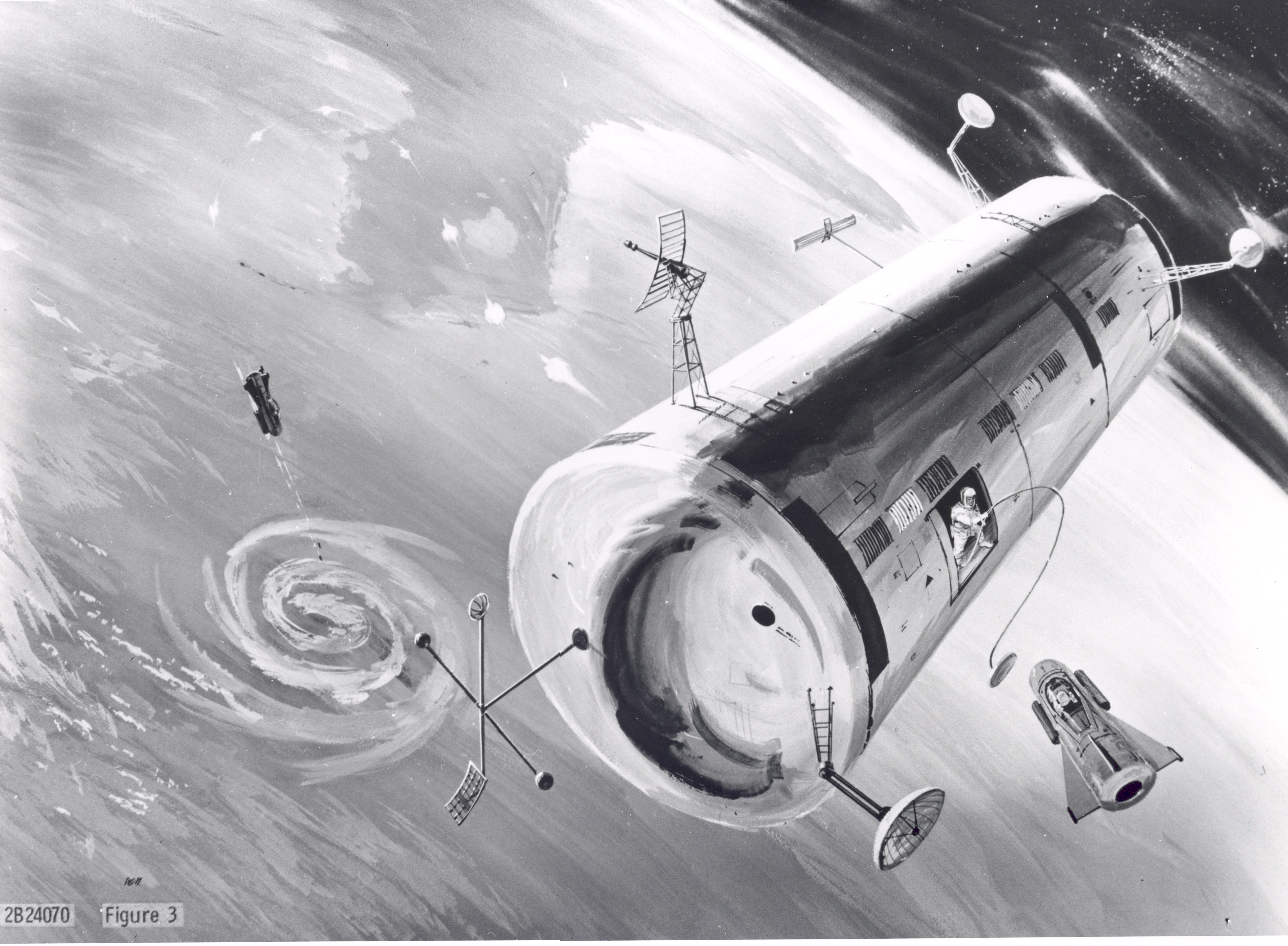 Proposed USAF Manned Orbiting Laboratory - GPN-2003-00094
 LC 5-6 blockhouse
 MOL 01
 Dorian 12
| Type | Subtype | Date | Description | Notes | Source |
|---|---|---|---|---|---|
| commons | image | The MOL used computers for design and simulation | Commons | ||
| commons | image | Manned Orbiting Laboratory concept illustration (120210-F-XN622-009) | Commons | ||
| commons | image | MOL configuration | Commons | ||
| commons | image | MOL patch from NRO | Commons | ||
| commons | image | MOL hardware under construction | Commons | ||
| commons | image | MOL computers | Commons | ||
| commons | image | Proposed USAF Manned Orbiting Laboratory - GPN-2003-00094 | Commons | ||
| commons | image | LC 5-6 blockhouse | Commons | ||
| commons | image | MOL 01 | Commons | ||
| commons | image | Dorian 12 | Commons | ||

.jpg)


