Q1332896: Difference between revisions
From Spacefaring
Q1332896
Bot: Automated import of articles *** existing text overwritten *** |
Bot: Automated import of articles *** existing text overwritten *** |
||
| Line 1: | Line 1: | ||
{{Page|M-V|Classes|Japanese solid-fuel rocket|M-5 | {{Page|M-V|Classes|Japanese solid-fuel rocket|M-5; Mu-5}} | ||
Latest revision as of 12:48, 2 September 2025
The M-V rocket, also called M-5 or Mu-5, was a Japanese solid-fuel rocket designed to launch scientific satellites. It was a member of the Mu family of rockets. The Institute of Space and Astronautical Science (ISAS) began developing the M-V in 1990 at a cost of 15 billion yen. It has three stages and is 30.7 m (101 ft) high, 2.5 m in diameter, and weighs about 140,000 kg (310,000 lb). It was capable of launching a satellite weighing 1,800 kg (4,000 lb) into an orbit as high as 250 km (160 mi).
Wikimedia, Wikidata
M-5; Mu-5
height 30.7 metre, diameter 2.5 metre,
Nissan, Japan,
Persia, Republic of Haiti, Mu, Ekran, Dong Fang Hong 2, Hayabusa, Tarshish, Sweden, Sikh Confederacy, Ashkenaz, Kingdom of Wolaita, Kingdom of Martabam-hongsawatoi, Japan, Havilah, Democratic Republic of the Congo, Chinland, Calvinist Republic of Ghent,
-
Location: KML, Cluster Map, Maps,
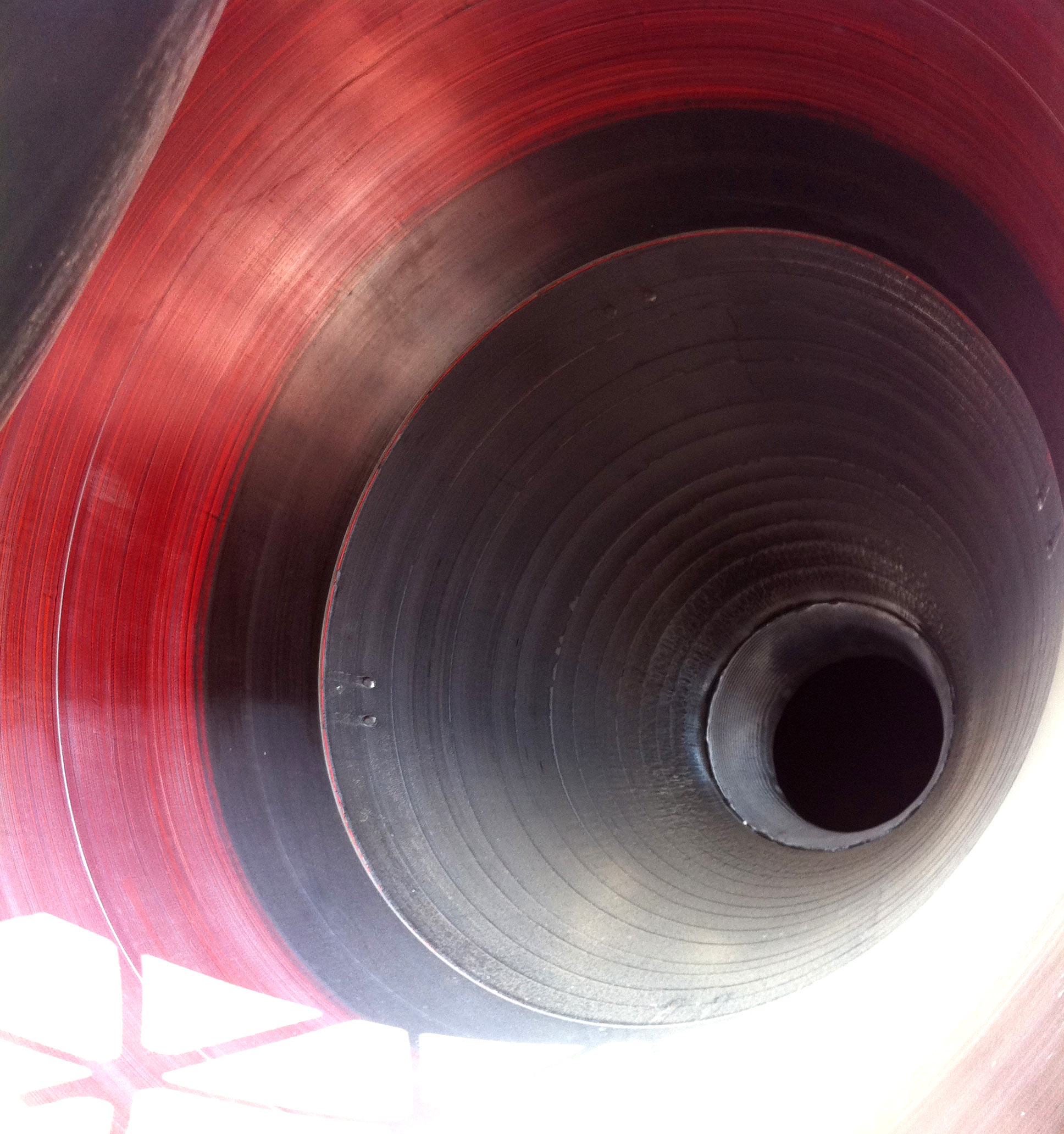 M-V 2nd nozzle
 M-V Fairing cutaway model P4037829
| Type | Subtype | Date | Description | Notes | Source |
|---|---|---|---|---|---|
| commons | image | M-V 2nd nozzle | Commons | ||
| commons | image | M-V Fairing cutaway model P4037829 | Commons | ||

