Saturn I
From Spacefaring
Q521076
The Saturn I was a rocket designed as the United States' first medium lift launch vehicle for up to 20,000-pound (9,100 kg) low Earth orbit payloads. Its development was taken over from the Advanced Research Projects Agency (ARPA) in 1958 by the newly formed civilian NASA. Its design proved sound and flexible. It was successful in initiating the development of liquid hydrogen-fueled rocket propulsion, launching the Pegasus satellites, and flight verification of the Apollo command and service module launch phase aerodynamics. Ten Saturn I rockets were flown before it was replaced by the heavy lift derivative Saturn IB, which used a larger, higher total impulse second stage and an improved guidance and control system. It also led the way to development of the super-heavy lift Saturn V which carried the first men to landings on the Moon in the Apollo program.
Wikimedia, Wikidata
Stellantis North America, United States,
United States, Retro Space HD, Dong Fang Hong 2, H-1, launch vehicle, Saturn, AS-101, A-103, A-104, A-105,
- Retro Space HD page@ The First Ten Lives of Saturn I
Location: KML, Cluster Map, Maps,
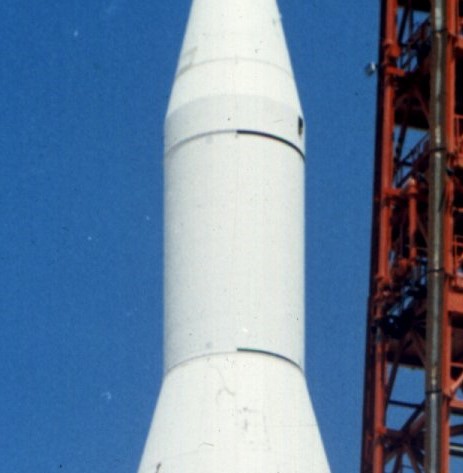 S-V stage used on the Saturn I rocket
 MichoudStacks1964
 A 1/20th-scale model of first-stage Saturn is prepared for testing in the 16-foot transonic wind tunnel at Arnold Air Force Base in the early 1960s
 Saturn I profiles
 A spider beam for cornecting the Saturn I fuel tanks is being positioned in the fabrication and engineering laboratory of the Marshall Space Flight Center (MSFC).
 Marshall Space Flight Center (MSFC) was the birthplace of the United States' rocket program. In the early 1960s, most of the rocket development and testing were done at the MSFC.
 Pictured in front of the Saturn 1 launch vehicle are (L to R): Dr. Rocco Petrone, Director of Launch Operations at Kennedy Space Center; Dr. Werher von Braun, Director of Marshall Space Flight Center; Dr.
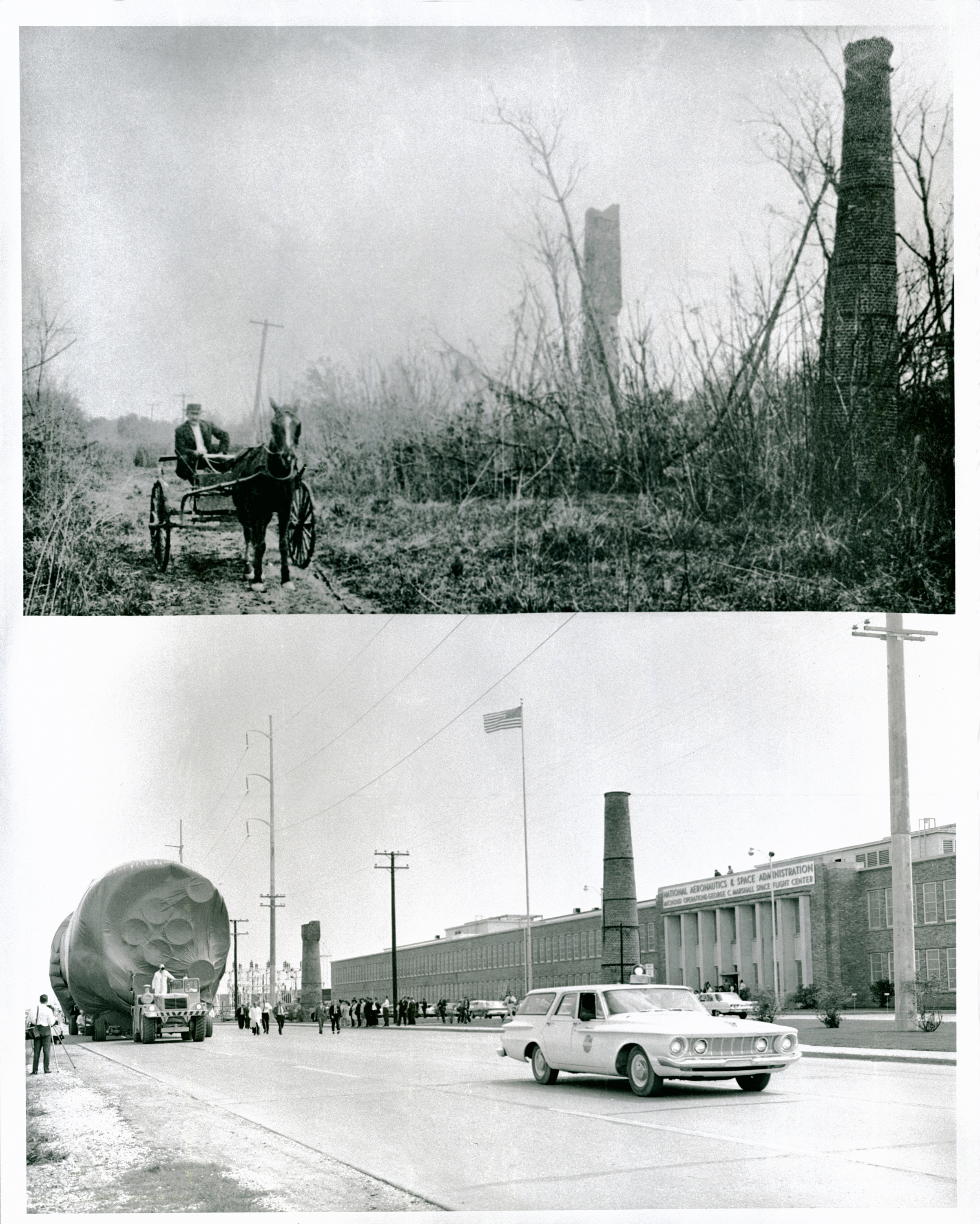 Horsepower and Rocketpower (15869919574)


.jpg)
.jpg)
.jpg)
.jpg)