Pioneer 11
From Spacefaring
Q59113
Pioneer 11 is a NASA robotic space probe launched on April 5, 1973, to study the asteroid belt, the environment around Jupiter and Saturn, the solar wind, and cosmic rays. It was the first probe to encounter Saturn, the second to fly through the asteroid belt, and the second to fly by Jupiter. Later, Pioneer 11 became the second of five artificial objects to achieve an escape velocity allowing it to leave the Solar System. Due to power constraints and the vast distance to the probe, the last routine contact with the spacecraft was on September 30, 1995, and the last good engineering data was received on November 24, 1995.

1973-04-06T00:00:00Z
1973-04-06T00:00:00Z
1973 Pioneer 11
1974-12-03T00:00:00Z
1974-12-03T00:00:00Z
planetary flyby
1973-04-06T00:00:00Z
1973-04-06T00:00:00Z
rocket launch
1979-09-01T00:00:00Z
1979-09-01T00:00:00Z
planetary flyby
1995-09-30T00:00:00Z
1995-09-30T00:00:00Z
loss of signal
{"selectable":false,"showCurrentTime":false,"width":"100%","zoomMin":100000000000}
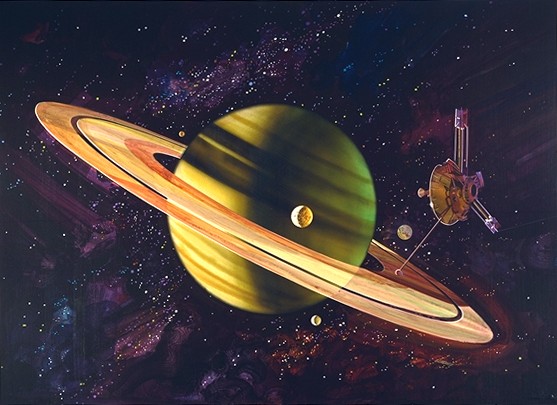 Pioneer 11 at Saturn
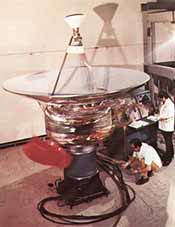 Pioneer 11 - p42
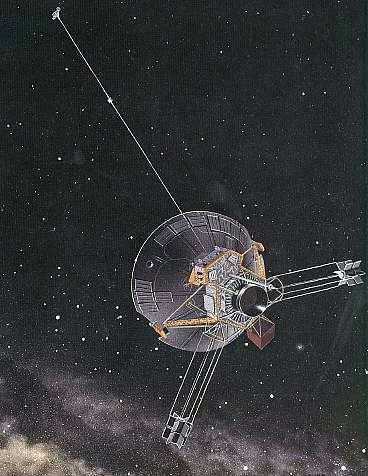 Pioneer10-11-wb
 Pioneer 10 - Pioneer 11 - mission patch - pioneer patch
 Pioneer 10 - Pioneer 11 - thrusters - p43
 An illustration (cropped image) of Pioneer 10 leaving the Solar System.
 Pioneer-G
 CAPE KENNEDY, Fla. -- In the AO Building at Cape Kennedy Air Force Station in Florida, the Pioneer G spacecraft awaits the installation of its protective payload fairing.
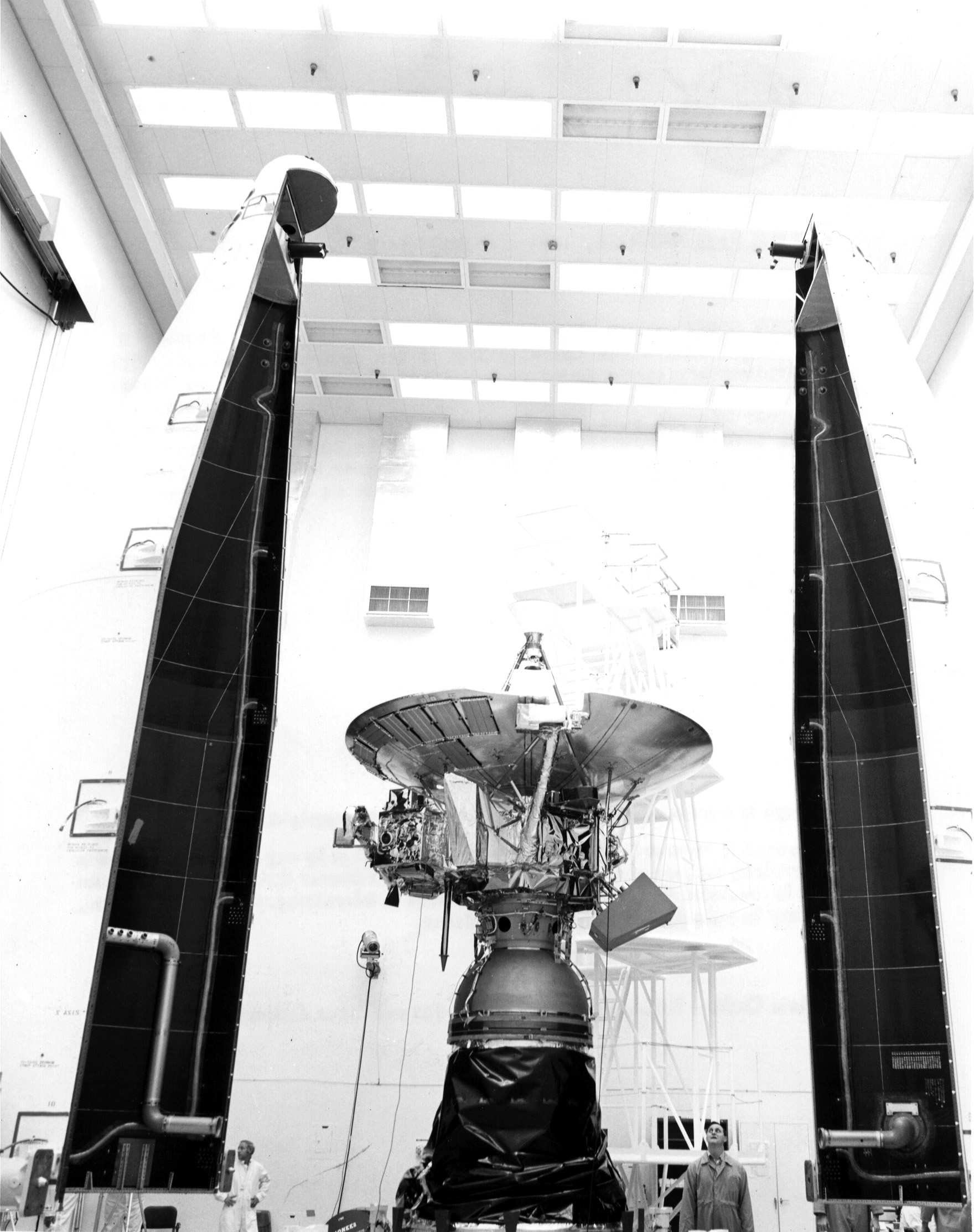 Pioneer 11 prior to launch
 Dr James Van Allen (L) and Dr E. J. Smith (R) during press conference for Pioneer 11 Jupiter encounter
- Infrared radiometer for the pioneer 10 and 11 missions to jupiter - scientific article, Q1860, 1974
| Type | Subtype | Date | Description | Notes | Source |
|---|---|---|---|---|---|
| commons | image | Pioneer 11 at Saturn | Commons | ||
| commons | image | Pioneer 11 - p42 | Commons | ||
| commons | image | Pioneer10-11-wb | Commons | ||
| commons | image | Pioneer 10 - Pioneer 11 - mission patch - pioneer patch | Commons | ||
| commons | image | Pioneer 10 - Pioneer 11 - thrusters - p43 | Commons | ||
| commons | image | An illustration (cropped image) of Pioneer 10 leaving the Solar System. | Commons | ||
| commons | image | Pioneer-G | Commons | ||
| commons | image | CAPE KENNEDY, Fla. -- In the AO Building at Cape Kennedy Air Force Station in Florida, the Pioneer G spacecraft awaits the installation of its protective payload fairing. | Commons | ||
| commons | image | Pioneer 11 prior to launch | Commons | ||
| commons | image | Dr James Van Allen (L) and Dr E. J. Smith (R) during press conference for Pioneer 11 Jupiter encounter | Commons | ||


.jpg)

_and_Dr_E_J_Smith_(R)_during_press_conference_for_Pioneer_11_Jupiter_encounter_(ARC-1974-AC74-9036-60).jpg)