Cluster II
From Spacefaring
Q13415034
Cluster II was a space mission of the European Space Agency, with NASA participation, to study the Earth's magnetosphere over the course of nearly two solar cycles. The mission was composed of four identical spacecraft flying in a tetrahedral formation. As a replacement for the original Cluster spacecraft which were lost in a launch failure in 1996, the four Cluster II spacecraft were successfully launched in pairs in July and August 2000 onboard two Soyuz-Fregat rockets from Baikonur, Kazakhstan. In February 2011, Cluster II celebrated 10 years of successful scientific operations in space. In February 2021, Cluster II celebrated 20 years of successful scientific operations in space. As of March 2023, its mission was extended until September 2024. The China National Space Administration/ESA Double Star mission operated alongside Cluster II from 2004 to 2007.
Wikimedia, Wikidata
European Space Agency,
European Space Agency, Dong Fang Hong 2, geomagnetic satellite,
-
Location: KML, Cluster Map, Maps,
 Cluster cutaway ESA9976019
 Cluster ESA15192620
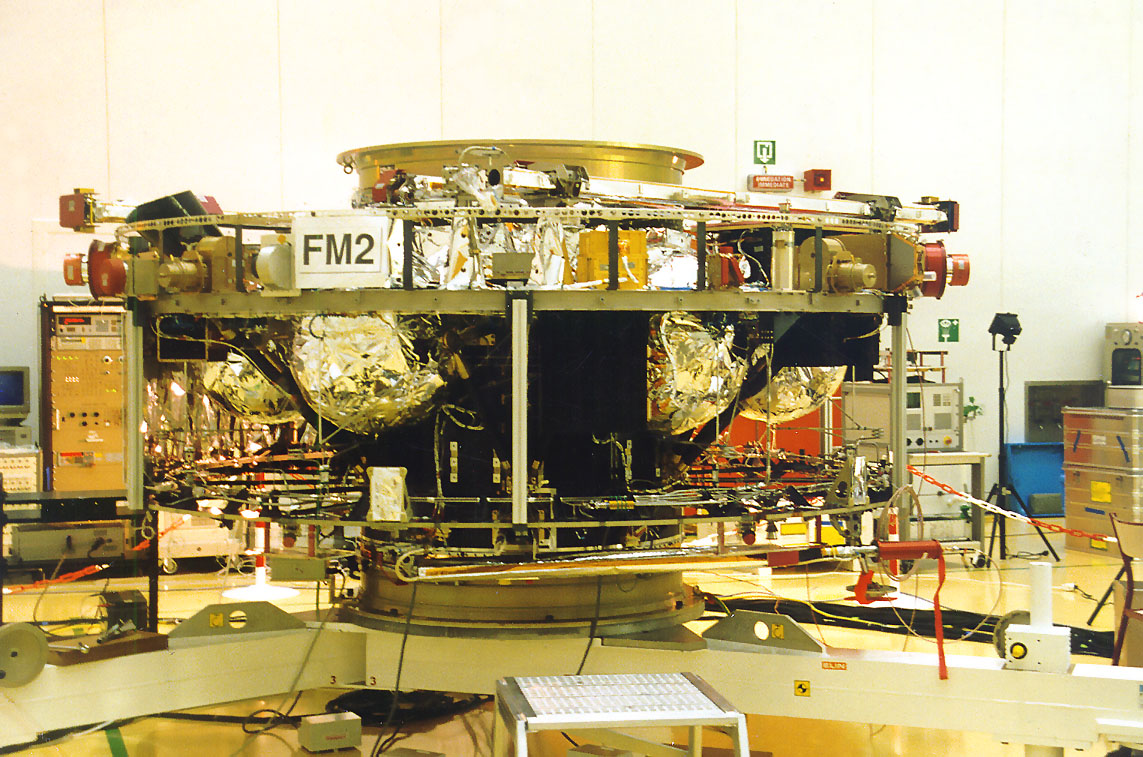 Cluster-FM2
 Cluster special configuration ESA15409083
 Cluster orbit correction ESA15409049
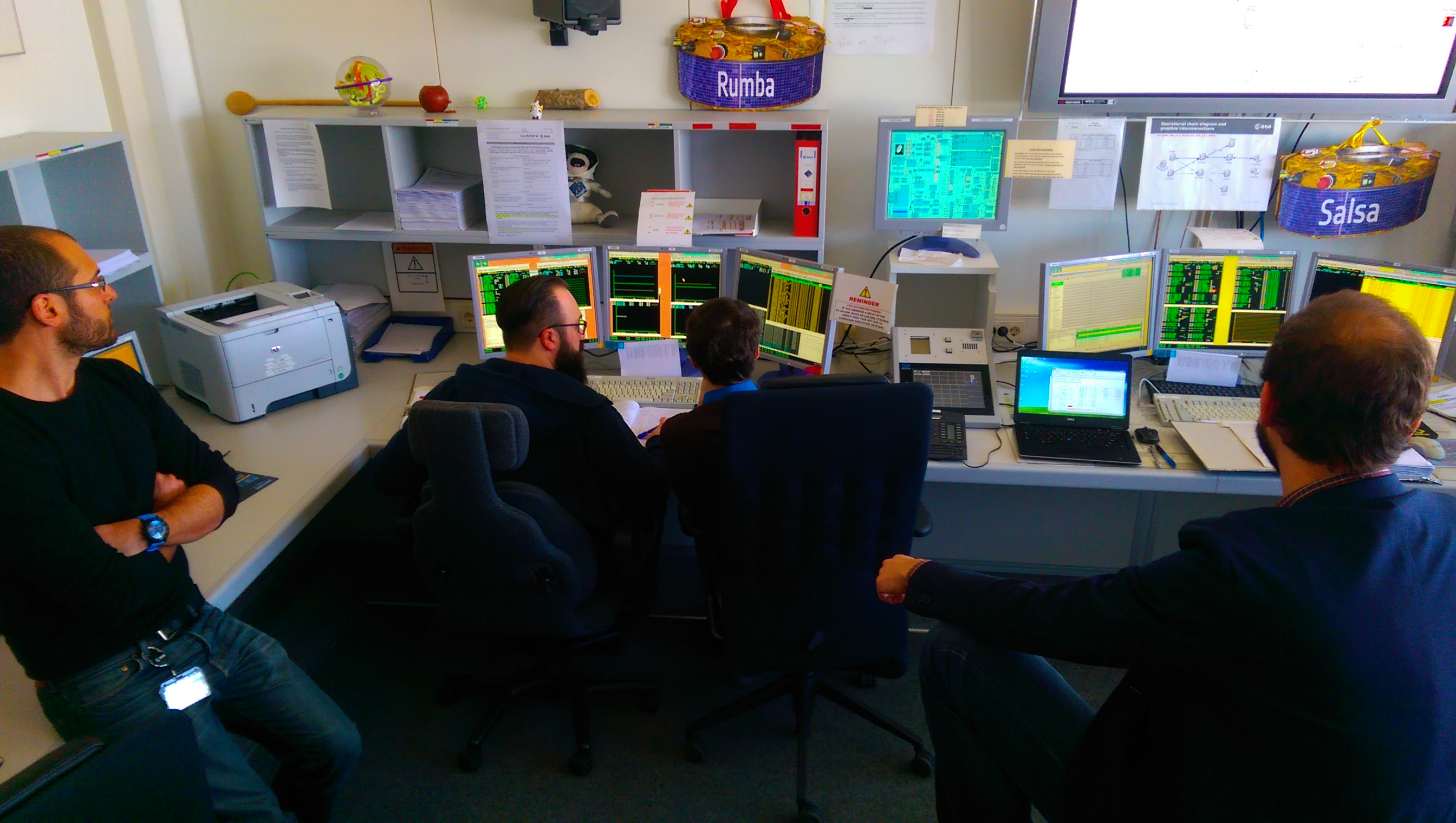
 ESOC Cluster Dedicated Control Room ESA193521
 On 8 September 2024, the first of four satellites that make up ESA’s Cluster mission will reenter Earth’s atmosphere over the South Pacific Ocean Uninhabited Area.
| Type | Subtype | Date | Description | Notes | Source |
|---|---|---|---|---|---|
| commons | image | Cluster cutaway ESA9976019 | Commons | ||
| commons | image | Cluster ESA15192620 | Commons | ||
| commons | image | Cluster-FM2 | Commons | ||
| commons | image | Cluster special configuration ESA15409083 | Commons | ||
| commons | image | Cluster orbit correction ESA15409049 | Commons | ||
| commons | image | ESOC Cluster Dedicated Control Room ESA193521 | Commons | ||
| commons | image | On 8 September 2024, the first of four satellites that make up ESA’s Cluster mission will reenter Earth’s atmosphere over the South Pacific Ocean Uninhabited Area. | Commons | ||


