Advanced Composite Solar Sail System
From Spacefaring
Q108831584
Solar sails are a method of spacecraft propulsion using radiation pressure exerted by sunlight on large surfaces. A number of spaceflight missions to test solar propulsion and navigation have been proposed since the 1980s. The two spacecraft to successfully use the technology for propulsion were IKAROS, launched in 2010, and LightSail-2, launched in 2019.
Wikimedia, Wikidata
ACS3
Rocket Lab, Sun-synchronous orbit, Electron, _(cropped).png)
-
Location: KML, Cluster Map, Maps,
2024-04-23T00:00:00Z
2024-04-23T00:00:00Z
rocket launch
2024-08-29T00:00:00Z
2024-08-29T00:00:00Z
deployment
{"selectable":false,"showCurrentTime":false,"width":"100%","zoomMin":100000000000}
 Advanced Composite Solar Sail System testingAdvanced Composite Solar Sail System testing
 Craig Turczynski, and Mario Perez install the solar panels on the +Y and -Y axis of Advanced Composite Solar Sail System (ACS3) spacecraft in the Ames Integration Facility in N213 room 104.
 Overview of the solar panels test of the Advanced Composite Solar Sail System (ACS3) spacecraft in the Ames Integration Facility in N213 room 104.
 Overview of the -Y axis of the Advanced Composite Solar Sail System (ACS3) spacecraft before the installation of the solar panels in the Ames Integration Facility in N213 room 104.
 Mario Perez, back, holds the deployable solar panel as Craig Turczynski, left, secures it to the Advanced Composite Solar Sail System (ACS3) spacecraft in the Ames Integration Facility located in N213 room 104.
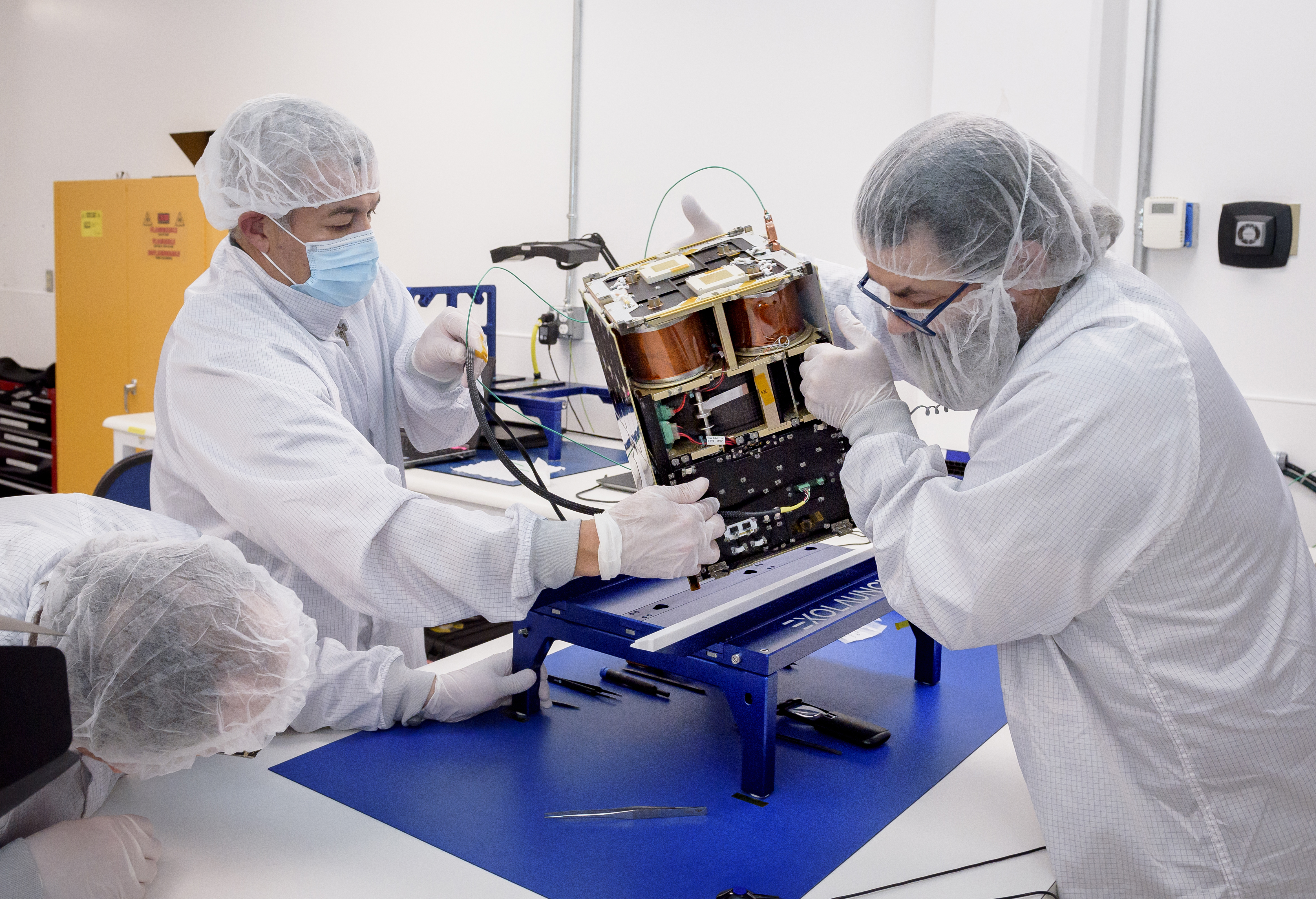 Left to right: Keats Wilkie, Mario Perez, and Craig Turczynski rotate the Advanced Composite Solar Sail System (ACS3) spacecraft on the workbench of the Ames Integration Facility located in N213 room 104.
 An artist’s concept of NASA’s Advanced Composite Solar Sail System spacecraft orbiting Earth, showing a configuration with solar arrays deployed and the sails and the booms stowed.
 NASA’s Advanced Composite Solar Sail System is seen orbiting Earth in this 13-second exposure photograph, Monday, Sept. 2, 2024, from Arlington, Virginia.
.jpg)
.jpg)
.jpg)
.jpg)
.jpg)
.jpg)
.jpg)